Maritime Compliance Copilot
A copilot that reads vessel paperwork and flags what's about to expire
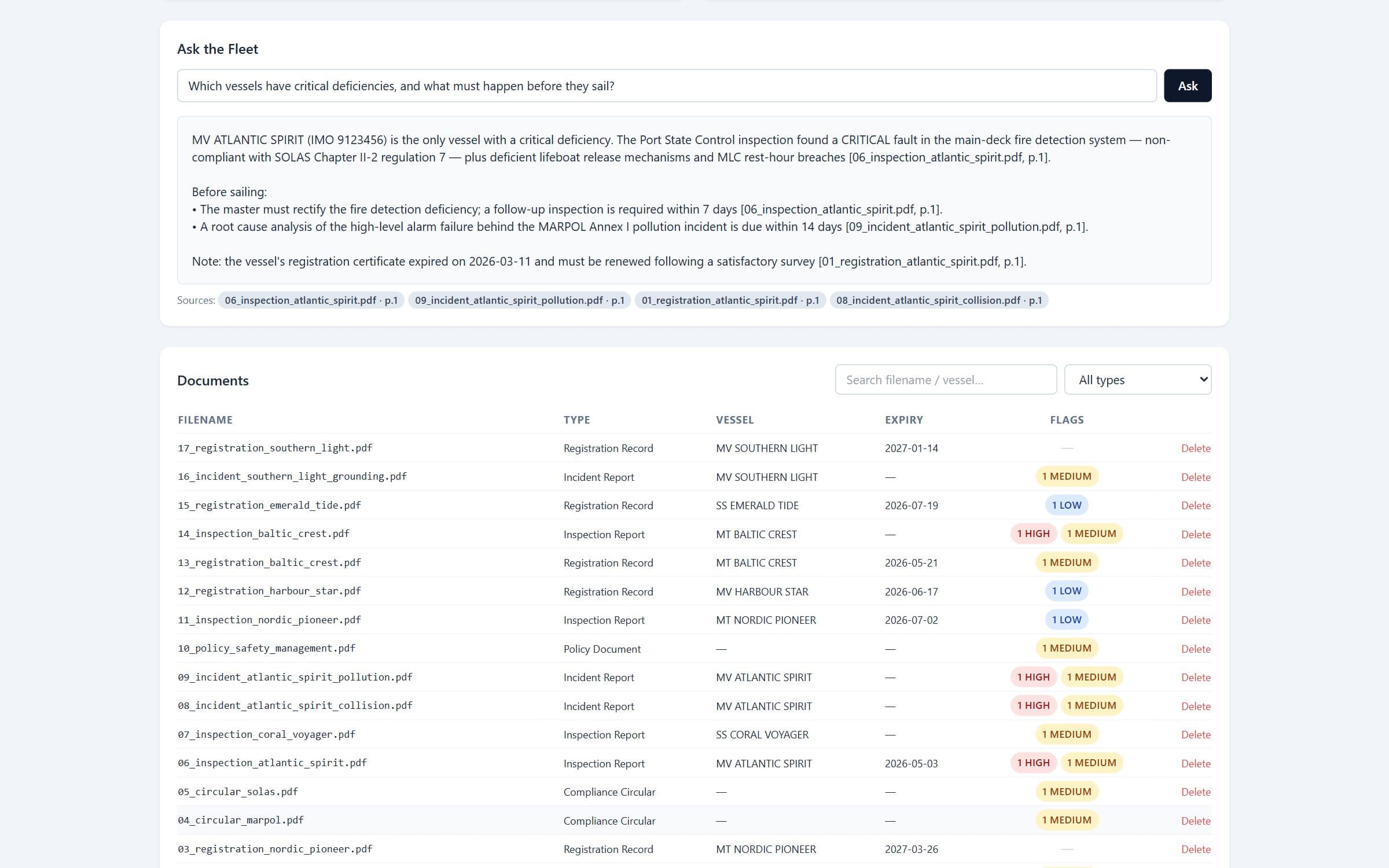
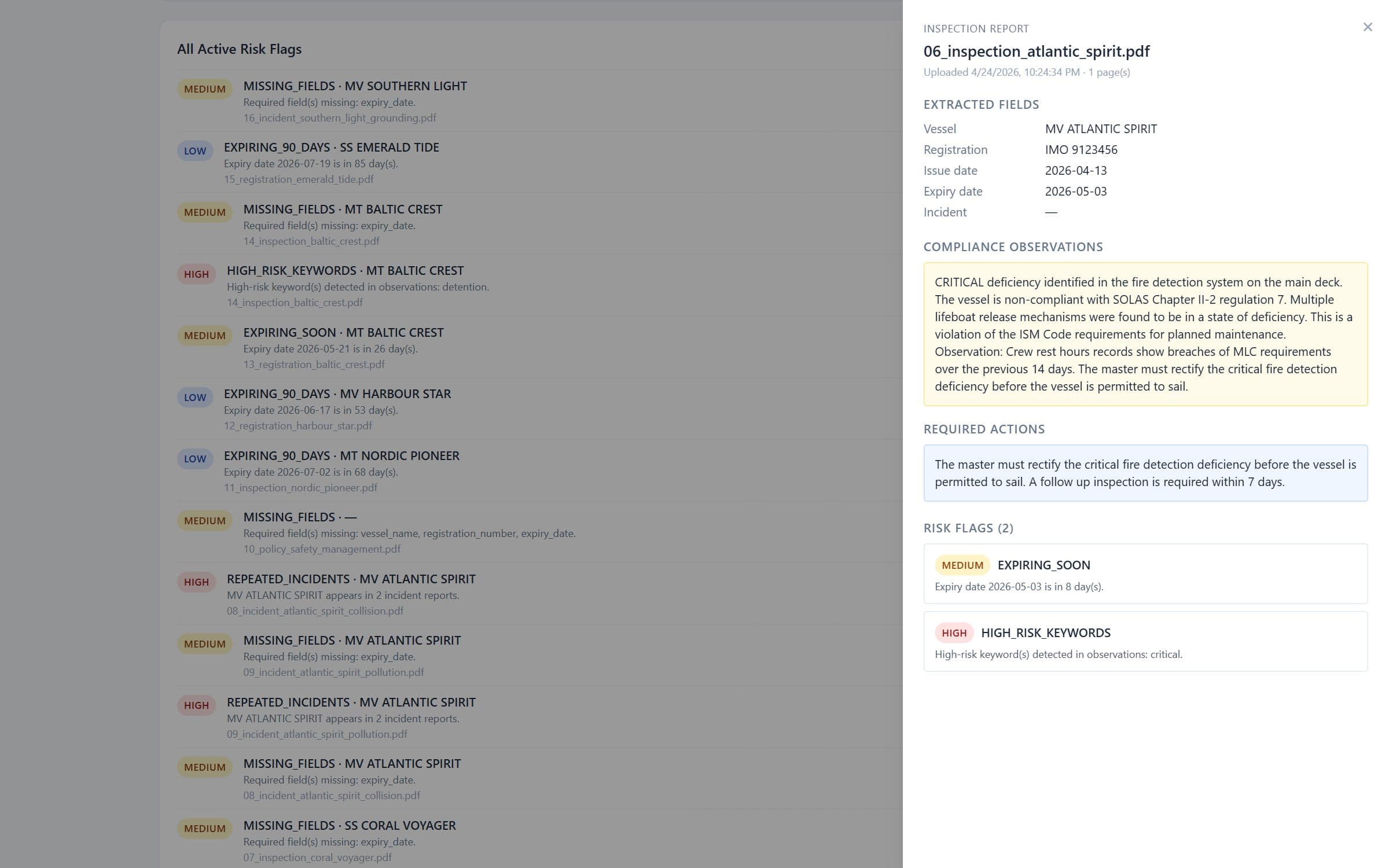
Reads registration certificates, inspection reports and MARPOL / SOLAS circulars. It extracts the fields that matter, raises risk flags, and answers fleet-wide questions with the file and page each answer came from.
- Client
- DataReveal AI
- Role
- Sole engineer
- Year
- 2026
- Stack
- FastAPI, PyMuPDF, spaCy, ChromaDB
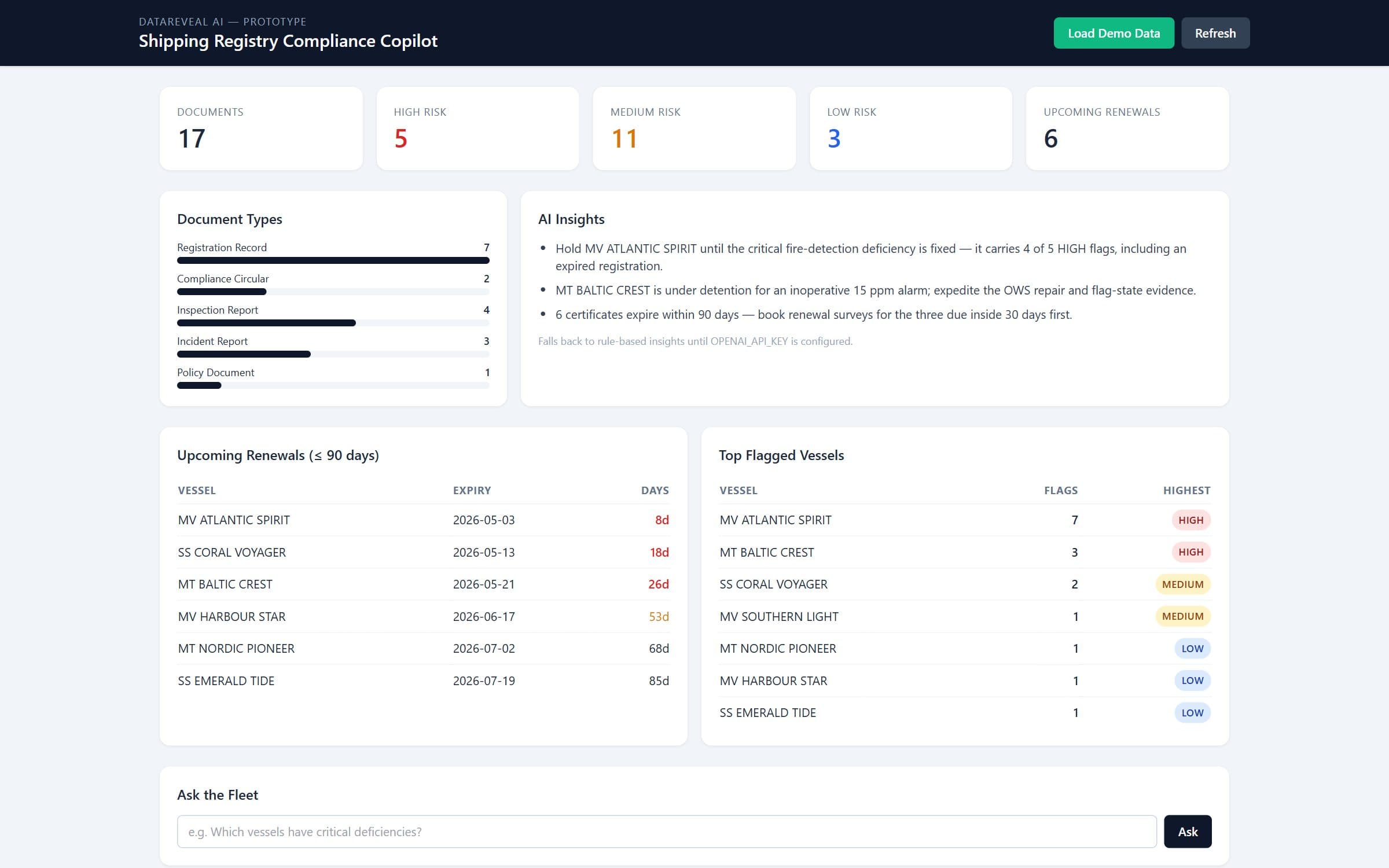
01The numbers
02The problem
Registry and fleet compliance teams work from stacks of PDFs. Knowing which certificate lapses next month, or which vessel keeps showing up in incident reports, means reading all of them, every time.
03What I built
Each PDF is read page by page and split into overlapping chunks. Named-entity recognition plus targeted patterns pull out the vessel name, registration number, dates, document type and incident details into a structured table.
A rules engine runs over that table and raises six kinds of flag, which feed an executive dashboard. For open questions, chunks are embedded locally and retrieved for a model that is told to answer only from the documents and to cite file and page.
It was built to demo with the client's team. One call seeds realistic synthetic vessel files, and an end-to-end test exercises every endpoint, from clearing the data to seeding it again.
04Architecture
05Engineering notes
- Local embeddings (MiniLM) and a local vector store. Only the final question goes to the LLM.
- Structured extraction and retrieval are separate paths, so the dashboards don't depend on the model.
- About 2,600 lines across six core modules and six API routers.
- CORS is set up for a separate React front end built by the client's team.
06Stack